
Top 10 insights from The Adviser Edge
Below we have selected our top 10 insights from The Adviser Edge – our series of thought leadership events designed to inform and inspire financial advisers.
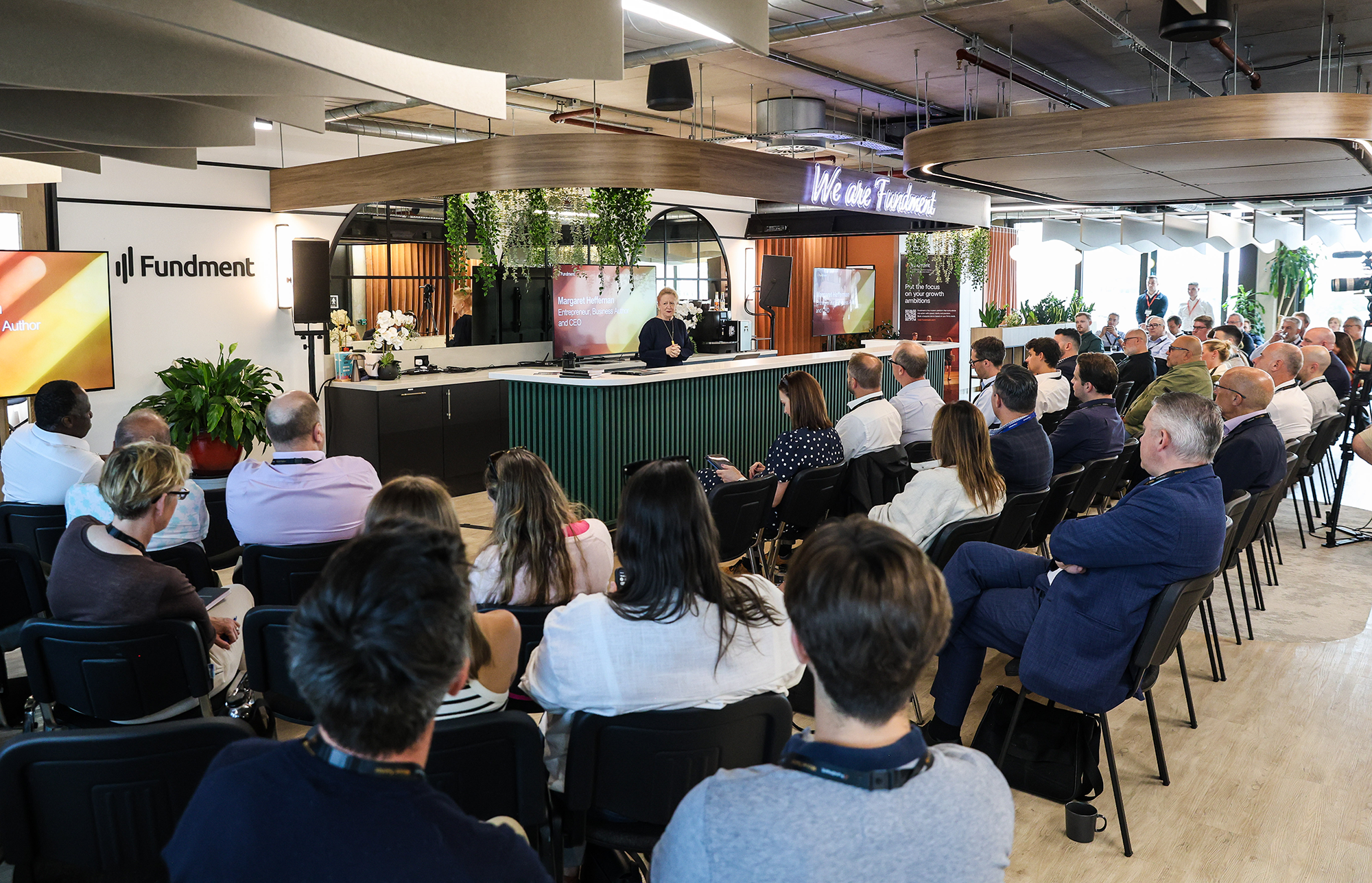
Our third Edge event took place at our offices in London on 30 June, and included four phenomenal speakers: entrepreneur, author and CEO Margaret Heffernan, performance coach and psychologist Jamil Qureshi, founder of accountant_she and striveX Rachel Harris, and Quilter Cheviot’s Head of Technical David Denton.
Amid the dozens and dozens of nuggets shared by our speakers, we’ve picked our top 10, grouped by theme…
Adviser mindset & psychology
Insight 1). High performers are motivated by what they seek to achieve, not what they seek to avoid
Performance coach Jamil Qureshi contrasted two business owners: one driven by positive creation (financial independence, a dream home, more time with family), and one driven by fear (bankruptcy, redundancies, embarrassment).
Same business. Same market. Different psychology.
For advisers, Jamil said, this is the difference between: “I don’t want to lose clients.” VS “I want to create deeper, more valuable relationships.”
Or…
“I don’t want to fall behind competitors.” VS “I want to build the most future‑relevant advice experience in my market.”
Avoidance, Jamil said, leads to protectionism, neutrality, and stagnation, while achievement leads to ambition, innovation, and growth.
“Leaders… who perform best… I have found more often than not to be motivated by what they’re seeking to achieve and create, not motivated by what they’re seeking to avoid.””
Insight 2). People act on the pictures and words in their heads (so leaders must change thinking, not behaviour)
Jamil shared his core psychological model: Think... Feel... Act.
He illustrated this with:
The speed‑camera example (people slow down only to avoid a fine, not to protect society).
The “don’t think of a white bear” example (the brain moves toward the thing it’s told to avoid).
The elite golfers who never say “don’t hit it left” (because negative goal‑setting produces negative outcomes).
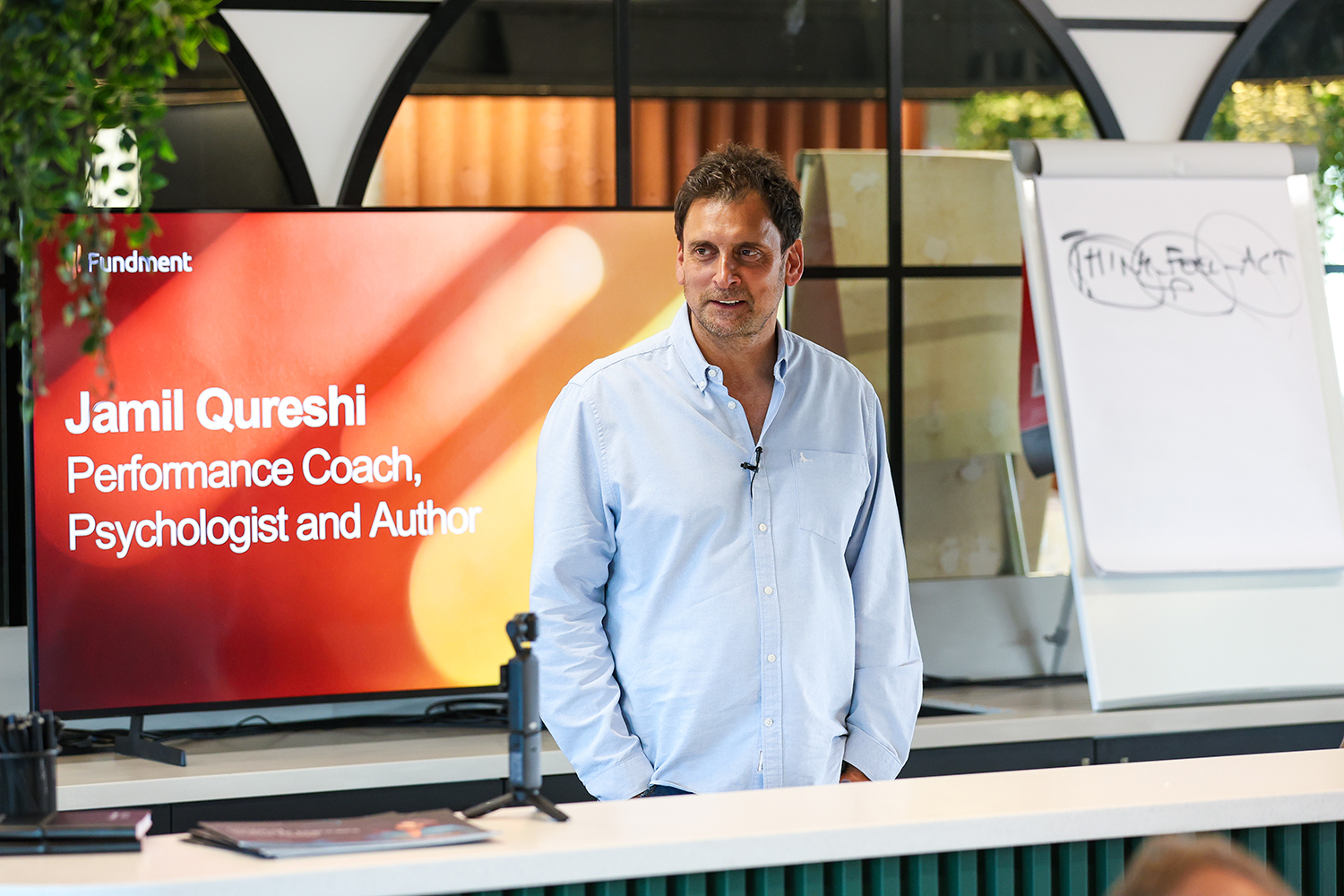
Jamil Qureshi, speaking at The Adviser Edge on 30 June
For advisers, Jamil suggested, this was a direct challenge: if you want clients, teams, or even yourselves to behave differently, you must first change the thinking that drives the behaviour. That could mean reframing goals, value, purpose, or what success looks like. Behaviour, Jamil concluded, follows belief.
““Smart leaders… don’t work in here [behaviour]. They work in here [thinking]. Changing words and pictures in their head… to drive different feelings which in turn result in different actions.””
Insight 3). Define yourself not by what you do, but by the value you create for others.
Another insight from performance coach Jamil Qureshi, who cited a real conversation he’d had with a firefighter who told Jamil his job was not to fight fires, but to “allow the future to take place”.
“He doesn’t define himself by what he does. He defines himself by the value that he creates for other people.”
For advisers, this can be transformative, Jamil suggested: You’re not someone who “manages portfolios” or “writes suitability reports.” You’re someone who:
Shapes financial security.
Creates clarity in chaos.
Enables families to thrive.
Helps people live lives they couldn’t have lived alone.
When advisers define themselves by their contribution, everything can change: energy, ambition, client connection, team culture, commercial outcomes.
AI, systemisation & operational excellence
Insight 4). AI won’t replace advisers but advisers who use AI will replace advisers who don’t
Rachel Harris, founder of accountant_she and striveX, said most professionals make the same mistake with AI that they’d never make with a new hire: they expect brilliance on day one, give no onboarding, and then declare “AI is rubbish.” Her point was simple but crucial: AI is only as good as the brief, the context, and the feedback loop you give it.
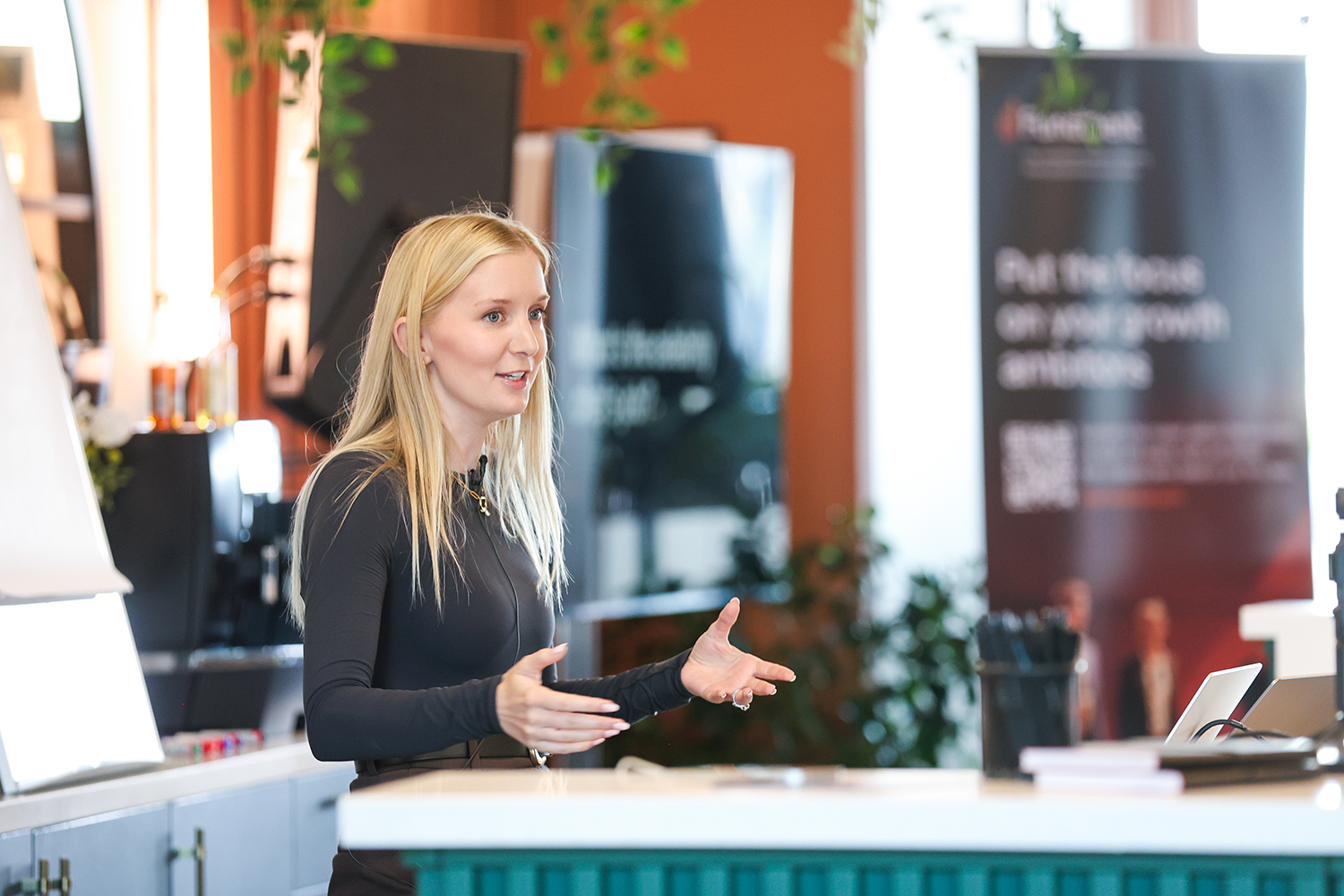
Rachel Harris speaking at The Adviser Edge
For advisers, this reframes AI from a threat to a multiplier.
Not “AI will replace advice” but “AI will replace admin, friction, and inconsistency, freeing me to deepen relationships.”
Not “AI makes advice robotic” but “AI makes my business more consistent so advisers can make the experience more human.”
Harris said the firms that win the next decade won’t be the most technical or the cheapest, but the ones clients cannot imagine leaving. And something that can help make that happen is when advisers use AI behind the scenes to remove noise, speed up workflows, and create more time for wisdom‑based conversations.
“If you prompt [AI] badly, you will get a bad output. But if you prompt it brilliantly, you will get a brilliant output.”
Insight 5). Systemising your firm makes it more human, not less
Rachel’s analogy? Advisers should operate like a Gordon Ramsay restaurant: Your name is on the door, your standards define the experience, but you shouldn’t be in every kitchen. Your job is to write the recipes and hire great chefs, not cook every dish.
For advisers, this is a mindset shift:
Systemisation isn’t dehumanising. Instead, it’s what protects the human moments.
Process doesn’t replace empathy. Instead, it creates the space for empathy.
AI doesn’t remove the adviser. Rather, it removes things that stop the adviser being present.
When every client journey is mapped, every touchpoint is intentional, and every complaint is handled with the same calm, structured process, clients feel safer. And safety is the foundation of trust.
“There is a difference between information and wisdom... your clients come to you for the wisdom.”
Technical planning & compliance discipline
Insight 6). The nil‑rate band (NRB) discretionary trust is now more valuable than the transferable NRB
“My contention today is that’s (NRB discretionary trust) a better bet than ever before... the transferable nil-rate band hasn’t created the best outcomes.”
Quilter Cheviot’s Head of Technical David Denton explained why advisers should revisit NRB discretionary trusts – despite the industry’s drift toward what he called the “lazy” transferable NRB.
The most powerful reason? Assets placed in the trust grow outside the survivor’s estate, while any future uplift in the NRB, if any, will only increase by CPI, not RPI. Over time, investment growth will almost always outpace a static NRB, or one growing only by CPI.
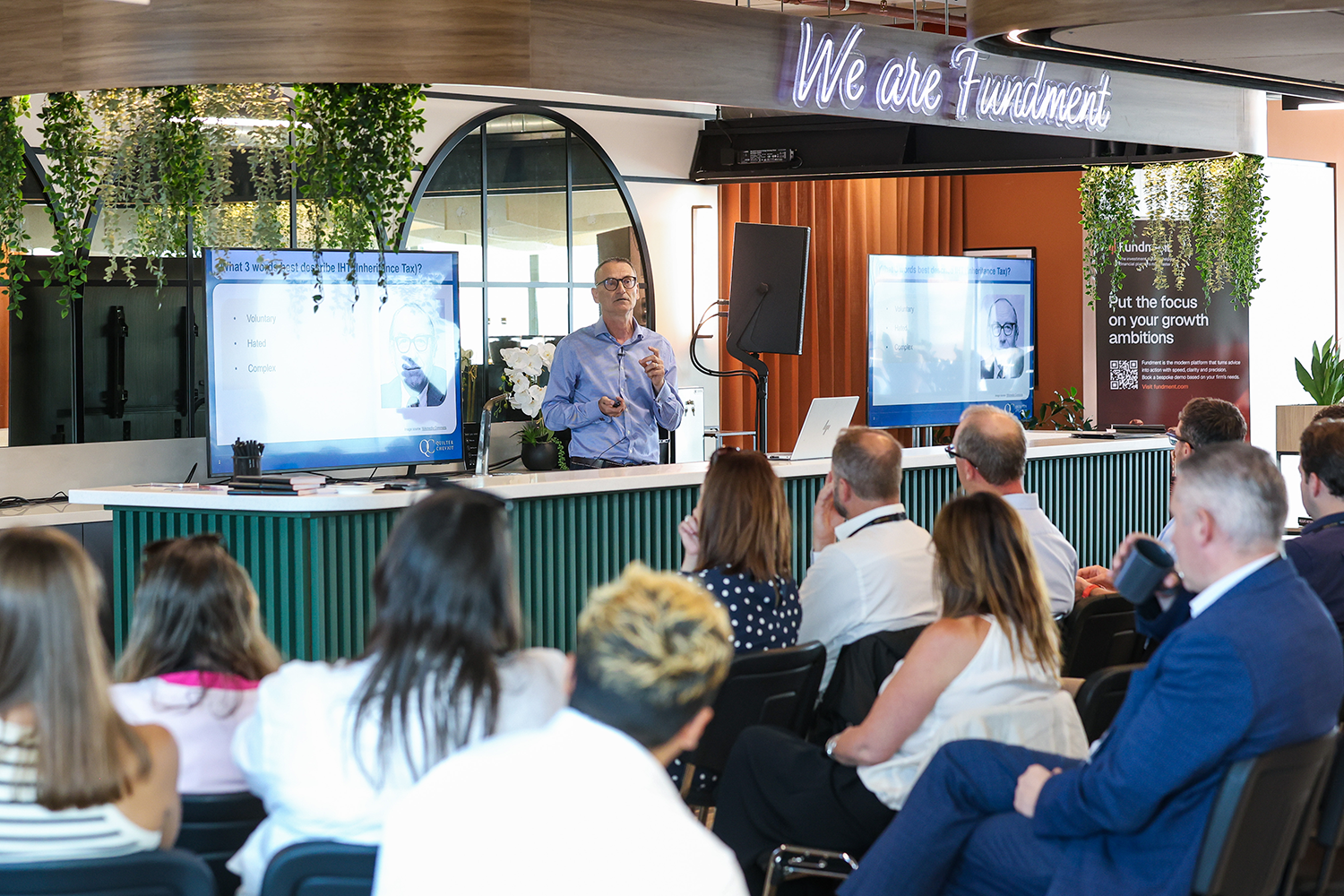
David Denton is Head of Technical at Quilter Cheviot
He also highlights two overlooked advantages:
Protecting the residence nil‑rate band by keeping the survivor’s estate below £2m.
Remarriage scenarios, where relying solely on transferable NRBs caps the benefit at one NRB (but using a trust can secure two full NRBs plus the survivor’s own).
David’s takeaway? If you’re still defaulting to the transferable NRB, you’re likely leaving tax efficiency on the table. For estates near or above £2m, NRB discretionary trusts should be back in your core planning toolkit.
Insight 7). HMRC Connect makes ‘casual’ gifting assumptions dangerous (record‑keeping is now non‑negotiable).
David’s warning was blunt: HMRC’s AI‑driven Connect system is now sophisticated enough to detect lifestyle patterns, spending behaviour, and inconsistencies between declared gifts and real‑world activity. He cites examples ranging from Deliveroo data to bank feeds.
This matters because:
Approximately one in eight taxable estates is investigated (far higher than most advisers assume).
Underused reliefs (e.g. normal expenditure out of income) are only effective if documented meticulously.
Casual “they’ll never know” attitudes from clients are now actively risky.
David’s key takeaway for advisers: Your value isn’t just in structuring the plan; it’s in ensuring clients keep defensible, audit‑ready records. Build documentation habits into your advice process, especially around regular gifts, including holidays paid for family, and property use.
“We’re all analysed not by name or number today, but by the pattern of our existence... social media, Amazon, PayPal, airline data... it joins up every part of our life”
Growth, momentum & entrepreneurial discipline
Insight 8). Momentum is the most undervalued asset in an advice business
Entrepreneur and author Margaret Heffernan said early‑stage entrepreneurs obsess over plans, processes, and perfection, but the businesses that actually survive are the ones that protect momentum at all costs. Momentum, she argued, is the difference between a business that grows and a business that stalls.
For advisers, Margaret said, momentum looks like:
Consistently moving client relationships forward.
Consistently improving your advice experience.
Consistently communicating, even on ‘bad days’.
Consistently taking small actions that compound into trust, referrals, and growth.
Heffernan said the minimum viable daily output for any entrepreneur is two meaningful actions, even if one of them is simply “write an email and send it.” Because stagnation is the real risk, she argued; once momentum drops, confidence drops, then energy, then client engagement. And recovery becomes exponentially harder.
“The momentum is the thing that’s most critical... because if you don’t keep the momentum going, there won’t be a business.”
Culture, values & organisational integrity
Insight 9). Culture is your strongest growth engine (and your biggest hidden risk)
Heffernan described hyper‑growth as adolescence: fast, disorienting, and identity‑shifting. Advisers who scale (whether through hiring, partnerships, or acquisition) often discover that the biggest threat is cultural drift.
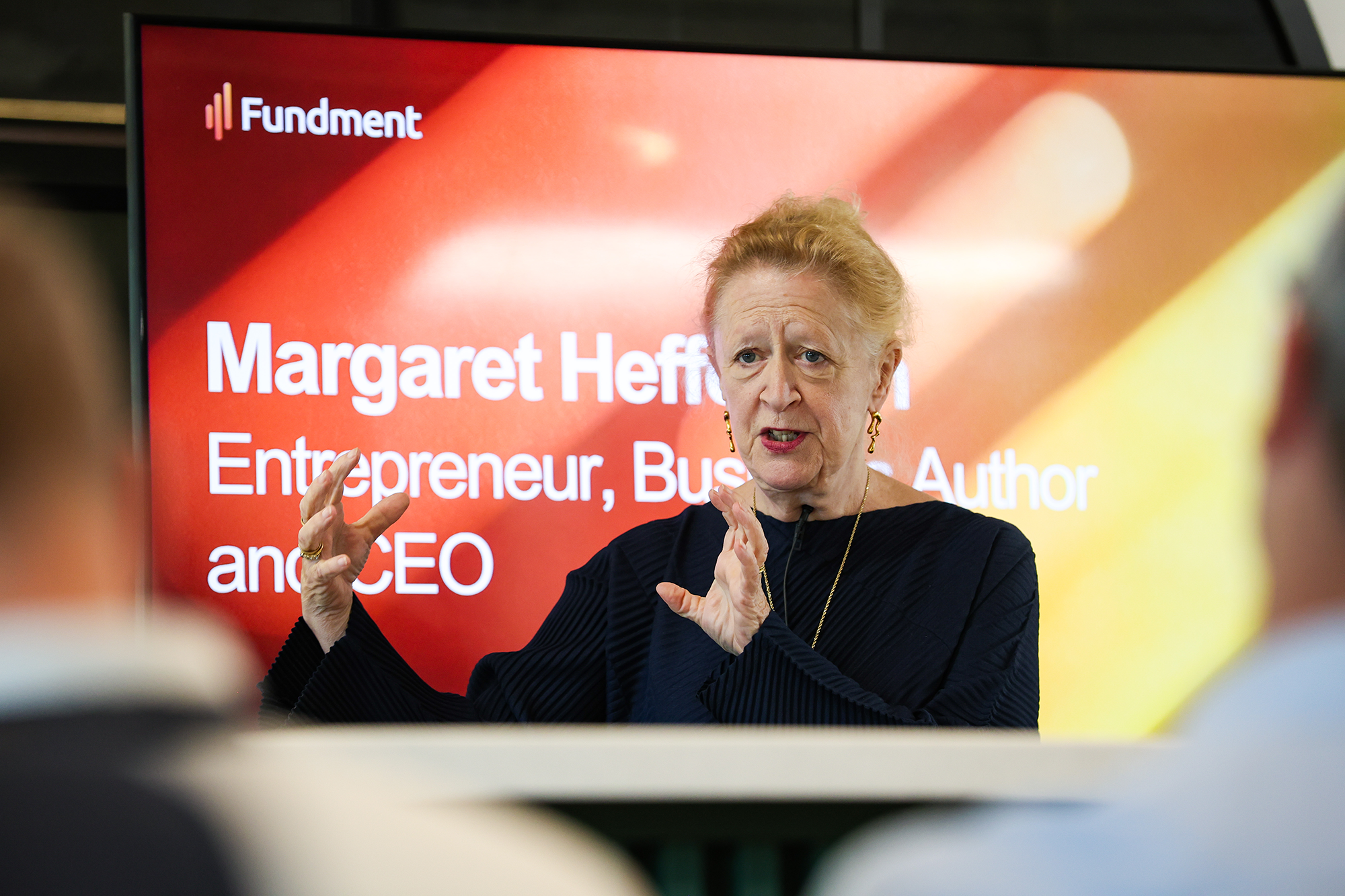
Margaret Heffernan has built and run five businesses across the UK and US
She warned that one misaligned partner, or wrong hire who crosses a line early, can poison a firm’s culture faster than any market downturn. “If you have values, stick to them with fanatical rigor,” Margaret said.
For advisers, this means:
Review clients as rigorously as you review staff.
If a client undermines your values, erodes trust, or drains your energy, they are a cultural risk, not just a commercial one.
Treat mergers and acquisitions as emotional events, not financial ones.
Advisers often underestimate how personal their business is. Heffernan said M&A only works when leaders confront cultural conflict openly, not when they “fudge” it or rush because of deal momentum.
“If you can’t make the call, don’t make the deal.”
Insight 10). Willful blindness is the silent killer of advice firms
Margaret’s research into organisational failure shows that most disasters – from Enron to Deepwater Horizon to the Post Office scandal – weren’t caused by lack of information, but by ignoring information that was already available (and visible).
She said advisers must be hyper‑alert to early warning signs: small ethical lapses, misaligned incentives, client behaviours that feel “off”, or internal processes that people quietly work around. “Serial killers start with cats,” she said – meaning small breaches become big breaches if tolerated.
For advisers, willful blindness might show up as:
Individual targets that distort behaviour: If someone can’t hit the target the right way, they’ll hit it the wrong way, and often at the client’s expense.
Processes people quietly bypass: If your team or clients are working around your systems, the system is broken.
Problems you notice but don’t address: Every ignored issue compounds. Every tolerated misalignment becomes cultural permission.
Advisers who confront small problems early build resilient firms, Margaret concluded. Advisers who ignore them build fragile ones.
“If you see symptoms [of wilful blindness], nip them in the bud... If you pretend they don’t matter, I promise you they will grow.”